by Jordan Chadwick, Braxton Institute Communications Team
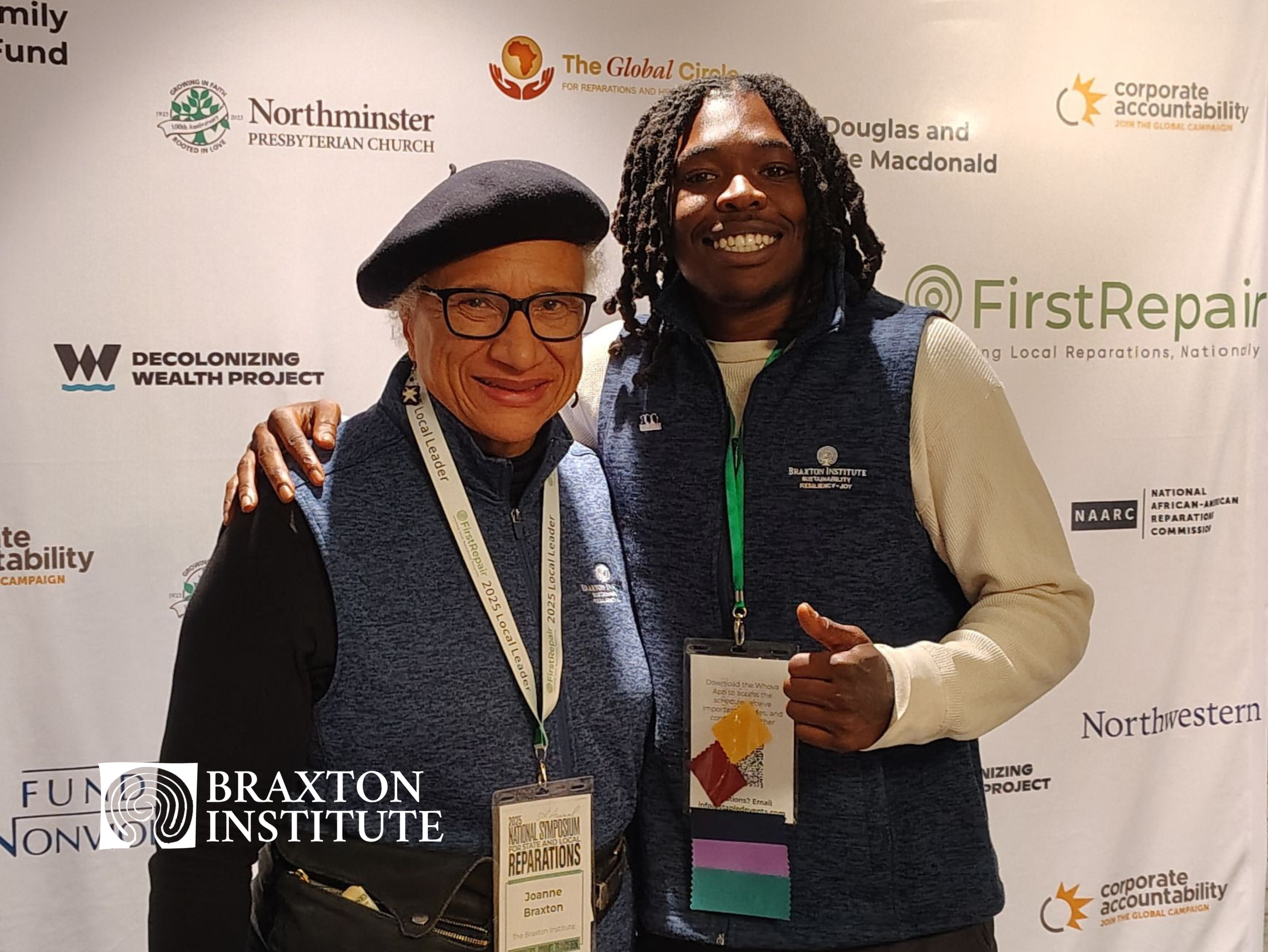
Rev. Joanne M. Braxton, PhD and Jordan Chadwick in Evanston, IL
Recently, the Braxton Institute was represented at the First Repair National Symposium for State and Local Reparations in Evanston, Illinois—a city recognized nationally for implementing the first municipally funded reparations program in the United States. Our attendees included Lakeland Community Heritage Project President Maxine Gross, Jordan Chadwick, Community Fellow and Bowie State University senior, board member Melisande Short-Colomb, and Communications Officer, Sophie Bouwsma, along with Dr. Joanne Braxton. We also initiated a clergy organizing for repair effort, bringing partners from the Unitarian Universalist Association and the United Church of Christ into the Evanston Symposium under the guidance of Dr. Braxton.
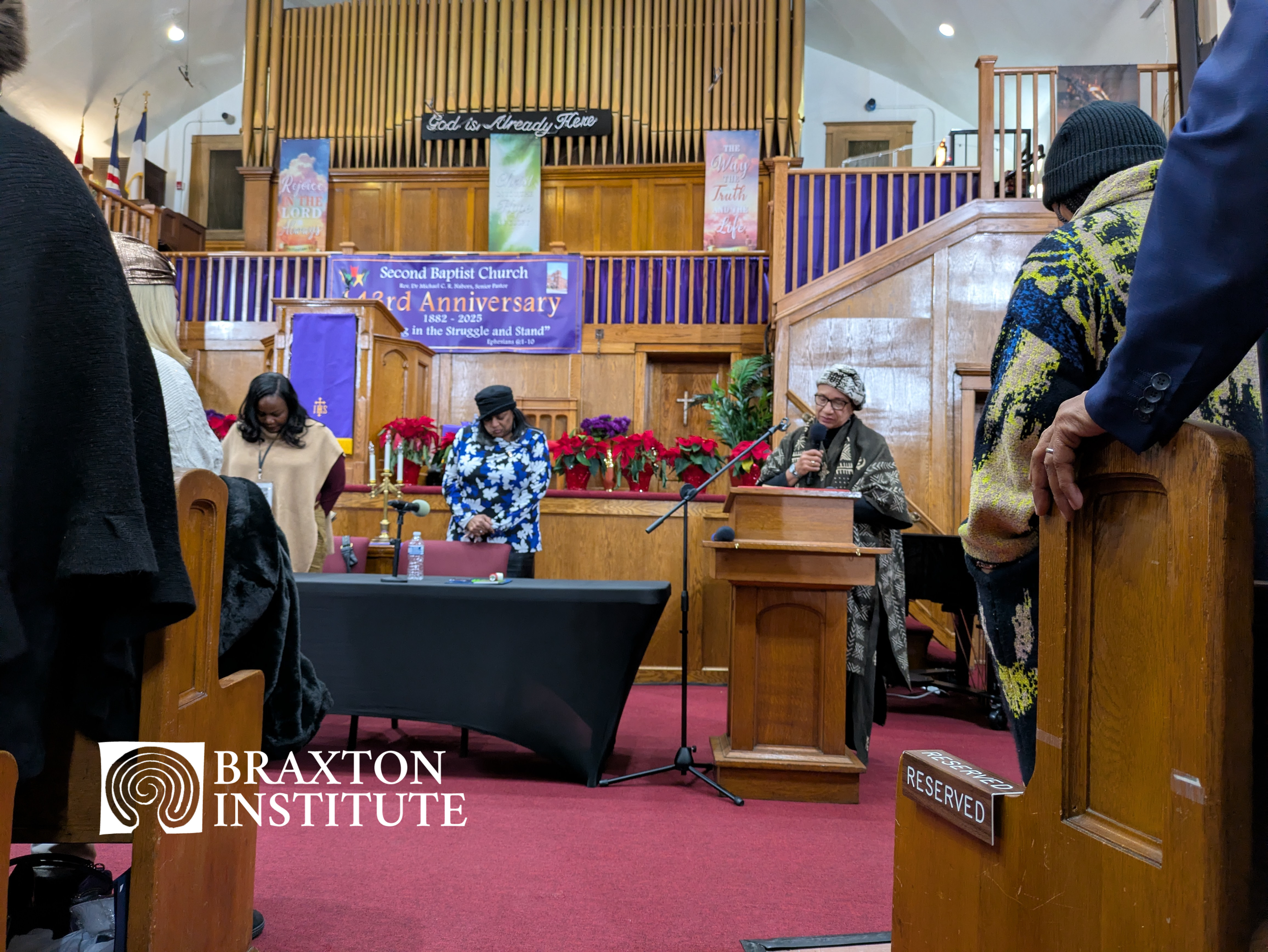
Rev. Joanne M. Braxton, PhD at the Evanston National Town Hall
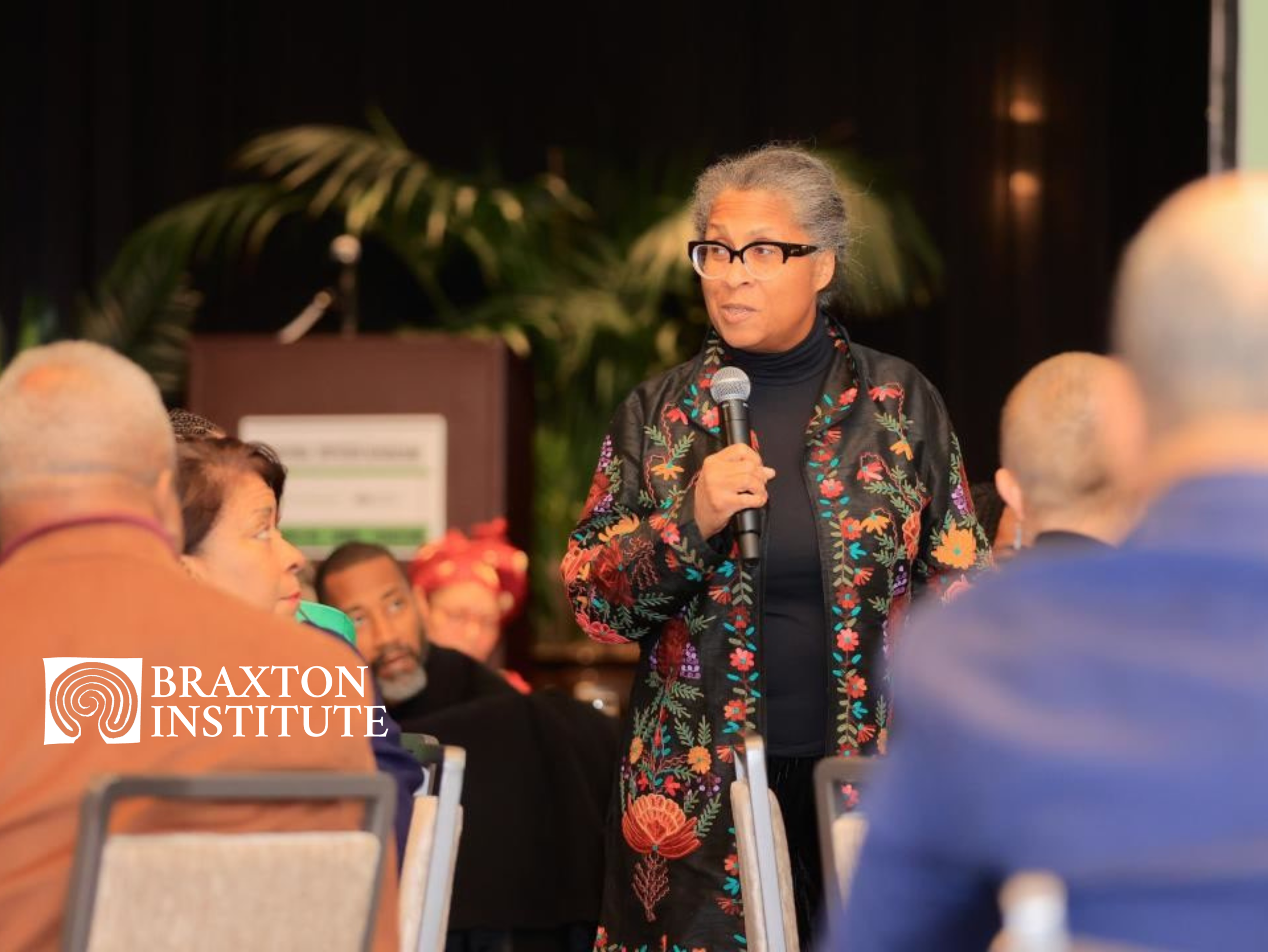
Maxine Gross, Lakeland Community Heritage Project President at the Evanston National Town Hall
The symposium convened leading scholars, policymakers, organizers, and advocates from across the country to examine how reparations initiatives are moving from study and acknowledgment toward structured, community-informed repair. Central to these discussions was the growing alignment around unified frameworks—particularly the Five Principles of Reparations, as defined by the United Nations—which emphasize comprehensive approaches to Restitution, Compensation, Rehabilitation, Satisfaction, and Guarantees of Non-Repetition.
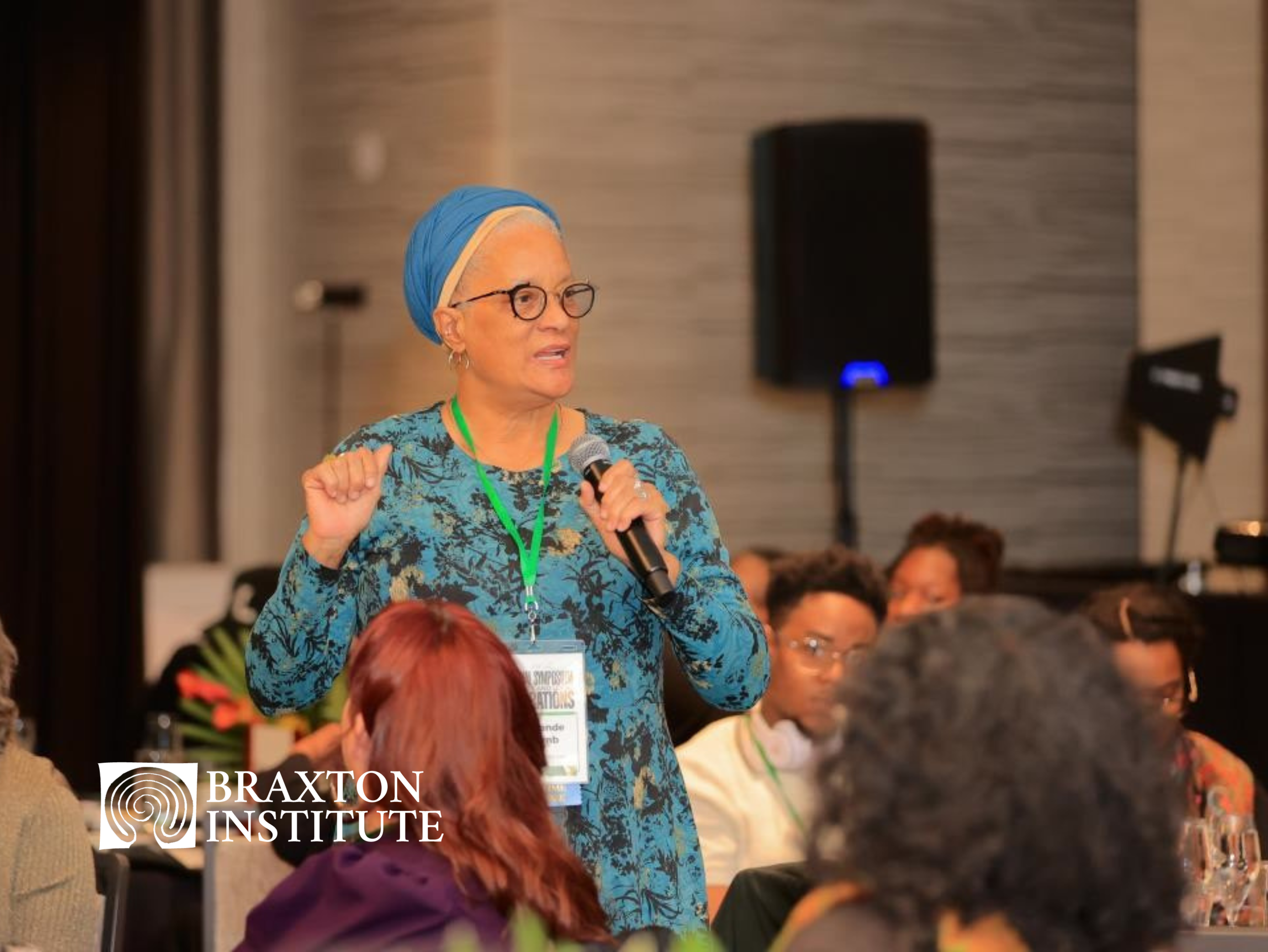
Melisande Short-Colomb, board member
Key Insights from Evanston
A critical lesson emerging from Evanston was the importance of grounding reparations work in local history and present-day community realities. Symposium leaders emphasized that effective reparations efforts must be shaped not only by historical documentation and descendant-based frameworks, but also by the lived experiences, needs, and priorities of people currently residing in impacted communities. This insight aligns closely with the Braxton Institute’s commitment to rigorous scholarship, ethical engagement, and community-centered approaches to reparative justice.
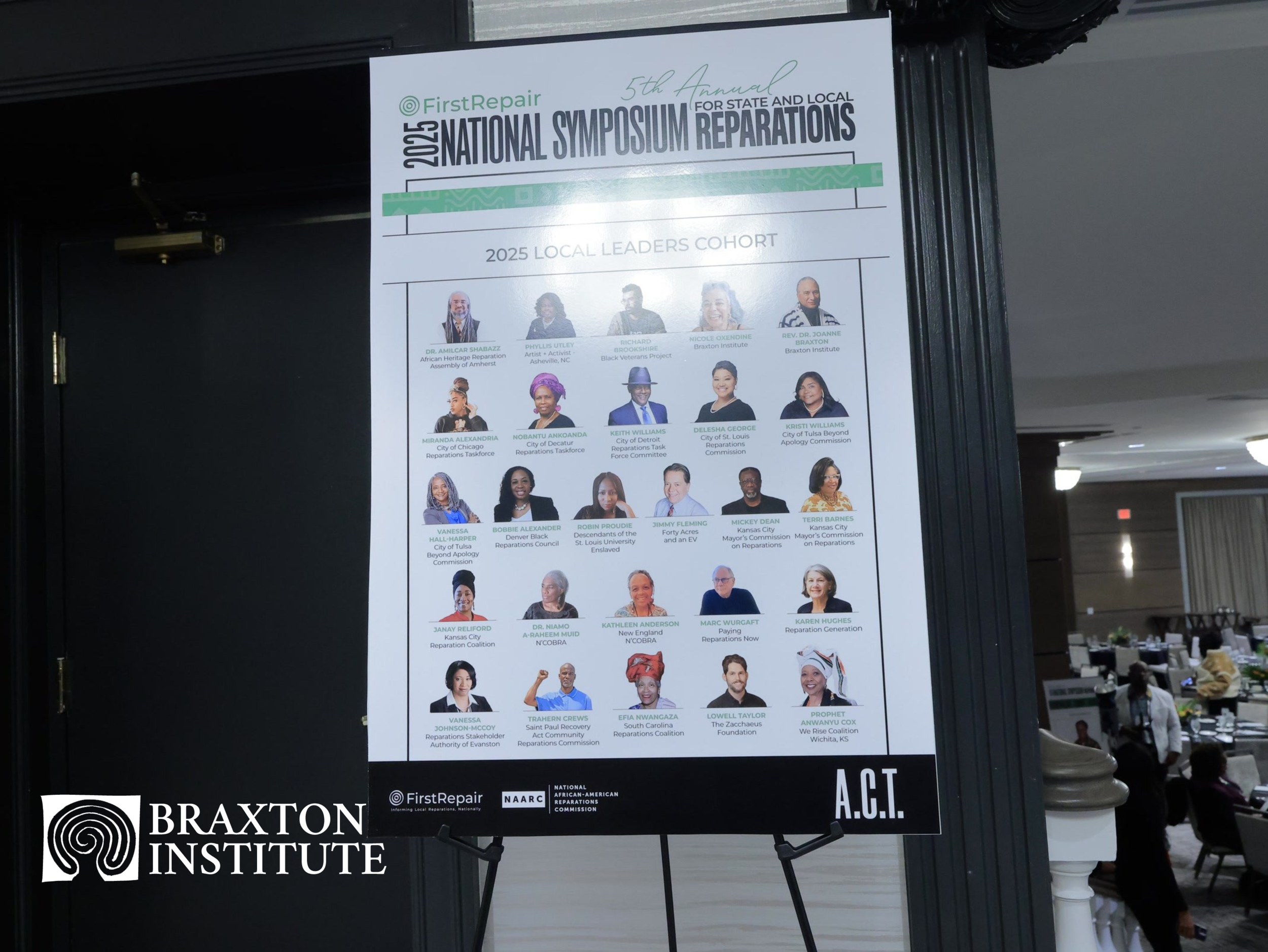
Reparations leaders from local orgaizations received recognition for their work.
Applying These Lessons in Maryland
The Braxton Institute continues to deepen its engagement in state and local reparations work through participation in national convenings and Maryland-based stakeholder efforts. As Maryland advances its own reparations process, the Institute is supporting efforts to ensure that statewide initiatives remain responsive, inclusive, and grounded in public education.
In this spirit, in in response to the recent establishment of a statewide Maryland Reparations Commission, a February 2026 Braxton Institute Dialogue on Resisting and Thriving convening will bring together scholars, advocates, policymakers, and community members to inform statewide reparations strategy. This meeting will focus on:
Incorporating the interests and perspectives of people represented in the reparations process
Examining the needs of present-day communities as well as traditional descendant-community focused frameworks
Creating space for dialogue on how reparations can address ongoing structural harms while ensuring historical accountability
Consistent with our prior work with First Repair, the African American Redress Network, the College Park Restorative Justice Commission, the Maryland Lynching Truth and Reconciliation Commission, the Lakeland Community Heritage Project, the Lakeland Civic Association and other partners, this convening aims to prioritize deep listening, alignment, and shared understanding as well as the all-important formation of consensus as Maryland moves forward in the work of repair.
Looking Ahead
National engagement, such as our partnerships with First Repair, N’COBRA, the Reparations Education Project, and the National Black Cultural Information Trust strengthen the Braxton Institute’s ability to contribute thoughtfully to Maryland’s reparations work—particularly through education, research translation, and community engagement. As this work continues, the Institute remains committed to fostering informed dialogue, supporting inclusive processes, and helping shape reparations frameworks that reflect Maryland’s history, communities, and future.