

“Black-Eyed Susans for Repair,” a new coalition of Maryland reparations advocates named for the vibrant and resilient state flower of Maryland, convened for the first time on February 9, 2026. In the words of Dr. Joanne Braxton, the convener: “One thing about a Black-Eyed Susan, when you see one, you never see one alone, you see a whole bunch! We are here today at this gathering because of those who came before us, for the beauty of those who struggle alongside us, and also for those who will follow.”
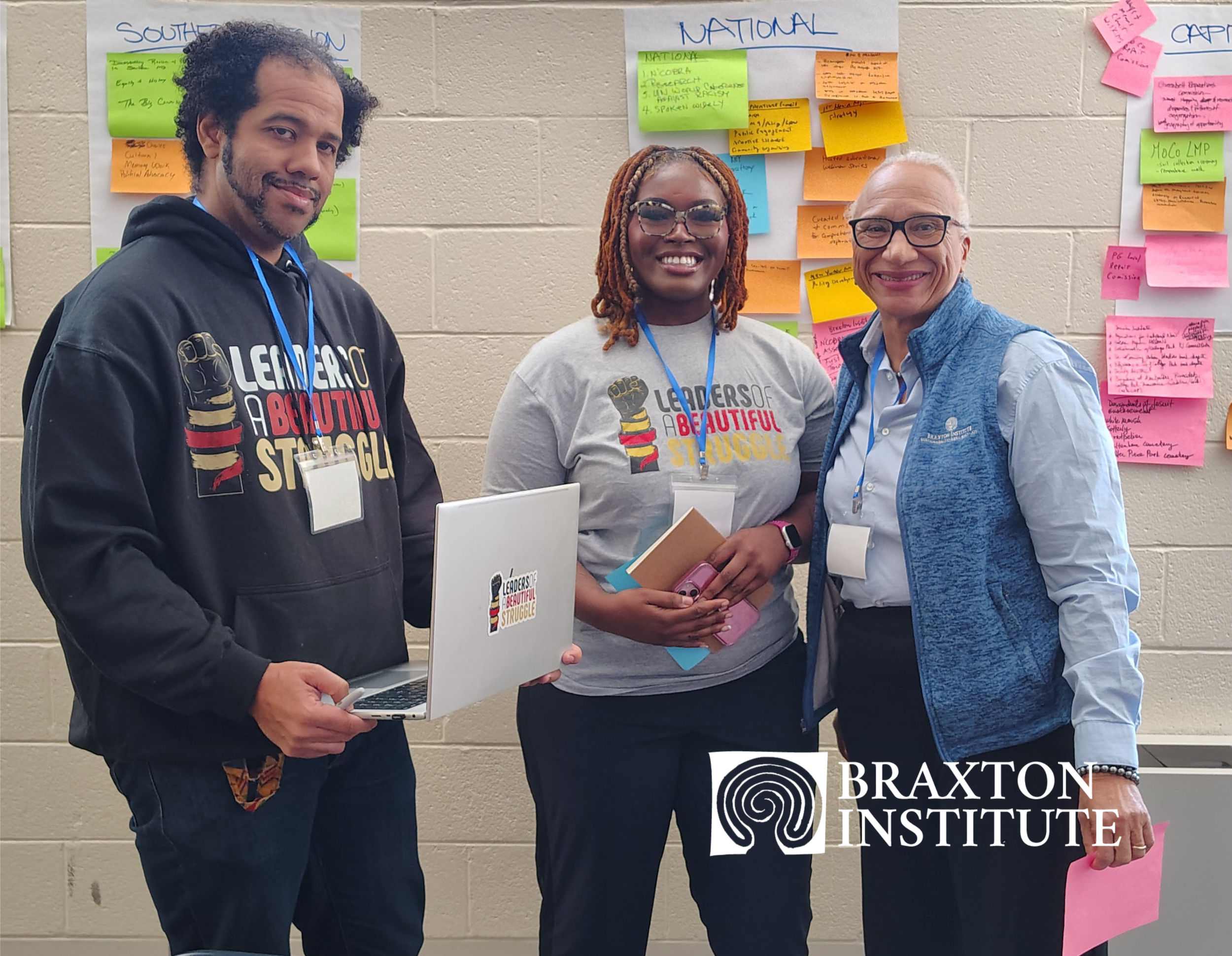
Lawrence Grandpre and Cairo Harris, Leaders of a Beautiful Struggle
Photo by Rebecca Ann Parker
The Braxton Institute hosted the gathering which brought together reparations advocates, organizers, researchers, and descendant-community leaders from across Maryland for a day of structured dialogue, strategic coordination, and relationship-building. Participants represented a broad cross-section of the state and its interconnected networks, including the Central region, Capital region, Southern Maryland, Western Maryland, Eastern Shore, Crossregional/DMV collaborations, National partners, and Statewide initiatives. The convening was part of the Braxton Institute Dialogues on Resisting and Thriving series, now in their 12th year.
The Maryland gathering focused on the practical conditions necessary to sustain and advance reparations work across jurisdictions and disciplines. Collectively, our reparations work focuses on repairing the harms of chattel slavery, Jim Crow, and their continuing vestiges in Maryland. Participants took part in substantive discussions on funding resources, knowledge-sharing and information infrastructure, technical assistance needs, legislative and policy strategy, partnership development, and the relational dimensions of movement-building, including the importance of spiritual grounding and emotional camaraderie alongside formal organizing practices. Speaker of the Maryland House, Joseline A. Peña-Melnyk was not able to attend in person, but sent an inspiring welcome message saying “This is sacred work.” View the speaker’s full recorded message here.
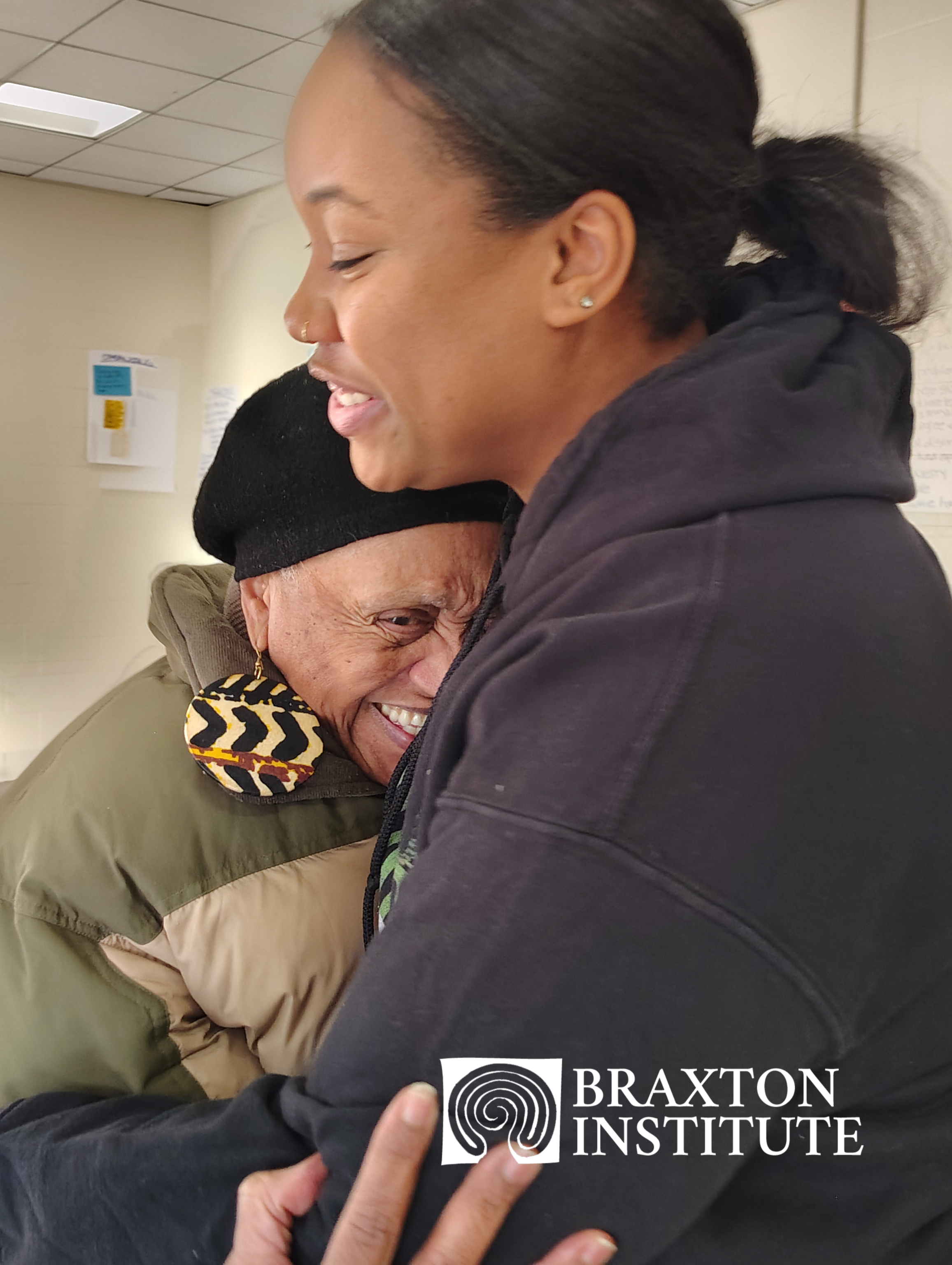
Keniss Henry of N'COBRA with Dreisen Heath, Why We Can't Wait Coalition
Photo by Rebecca Ann Parker
A central emphasis of the convening was aligning engagement approaches with the Maryland Reparations Commission while preserving momentum for independent, ongoing reparative efforts throughout the state. Participants noted that commissions and task forces historically operate on extended and evolving timelines. In response, the convening reinforced a dual strategic orientation: to thoroughly study, investigate, and influence commission processes while simultaneously implementing community-led initiatives that must not be constrained solely by state timelines.

Dialogue throughout the convening examined how localized reparations campaigns and descendant-community priorities are represented at the state level. Participants identified structural challenges, opportunities for coordinated advocacy, and the obligation to strengthen connective frameworks among local, regional, and statewide efforts. The convening underscored that durable progress necessitates intentional coordination across research, policy development, narrative strategy, resource mobilization, and community-centered implementation.
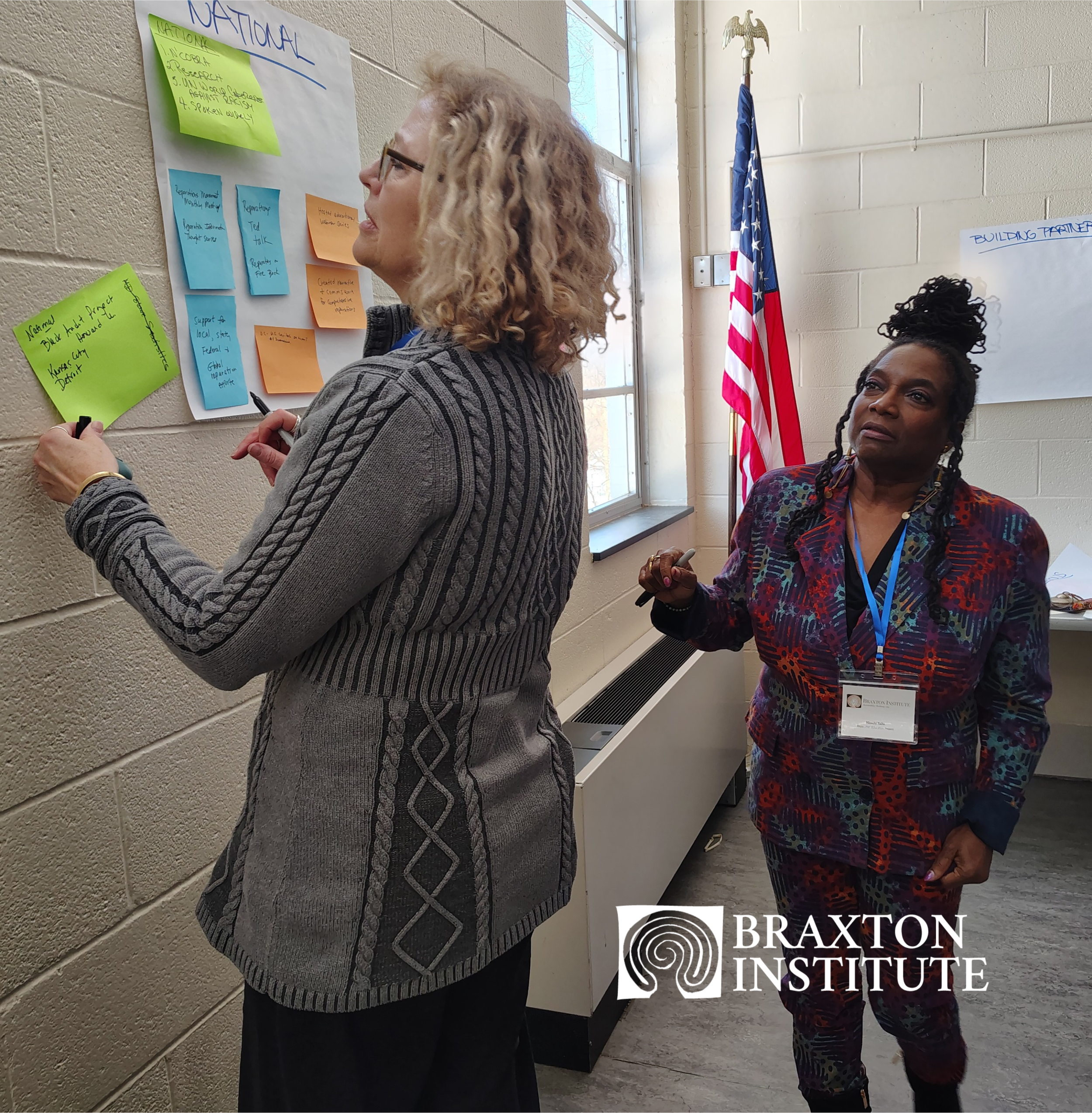
Nkechi Taifa, Reparations Education Project, and Linda Mann, African American Redress Network
Photo by Rebecca Ann Parker
By the conclusion of Black-Eyed Susans for Repair, participants had collectively advanced several foundational outcomes:
Strengthened intentional relationships among reparations leaders and organizations across Maryland
Expanded shared awareness of active initiatives, regional contexts, and key priorities
Increased alignment regarding engagement with and beyond the Maryland Reparations Commission
Clearer understanding of the interaction between local efforts and state-level processes
A developing set of steps intended to deepen collaborative capacity and sustained coordination
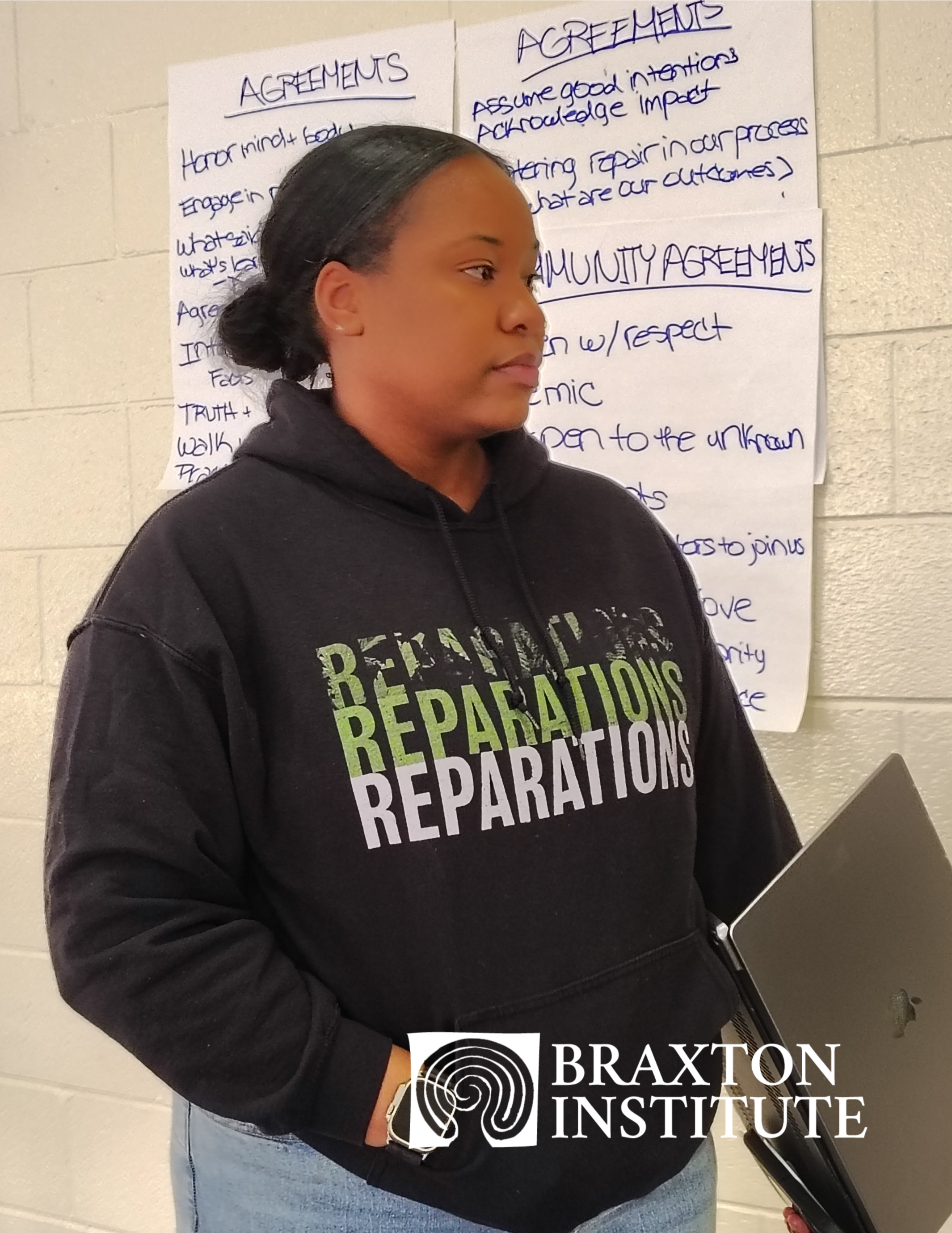
Lead Facilitator Dreisen Heath of the Why We Can’t Wait Coalition
Photo by Rebecca Ann Parker
Dreisen Heath of the Why We Can’t Wait Coalition served as lead facilitator. Heath is also a Braxton Institute Golden Repair Fellow and principal of Heath Strategies. The facilitation approach accentuated disciplined dialogue, cross-sector listening, and purposeful clarity, strengthening the convening’s purpose as a working space rather than a ceremonial gathering.
The convening was guided by a planning team whose leadership and expertise reflect longstanding commitments to reparative justice, historical inquiry, and community-centered practice. The planning team includes Jessica Ann Mitchell Aiwuyor (Executive Director, National Black Cultural Information Trust), Dr. Joanne Braxton (Founder and CEO, Braxton Institute), Maya Davis (Director, Riversdale House Museum), Maxine Gross (President, Lakeland Community Heritage Project), Virginie Ladisch (Liberation Ventures), Dr. Chris Haley (Director, Study of the Legacy of Slavery in Maryland), and Angela Wilson (Community Fellow, Braxton Institute).

Dr. Braxton affirmed a call to action: “If we move with the assurance that reparations can be realized in our time, we can live into that reality. In 2026 the work of repair also means repairing false narratives of our nation’s story as it continues to unfold. We in this movement contribute powerfully to that unfolding meaning – witnessing, documenting, intervening, interrupting cycles of harm, making repair.”
Black-Eyed Susans for Repair identified a core principle shared by participants: reparations work in Maryland functions as an interconnected ecosystem rather than a singular initiative. Advancing material repair, policy transformation, and historical redress requires sustained cooperation, rigorous research, and long-term investment in collaborative structures capable of supporting diverse yet aligned efforts. This convening constituted a meaningful step toward strengthening that ecosystem and strengthening the collective capacity necessary for enduring reparative change throughout the state of Maryland. The next Black-Eyed Susans convening is planned for May.
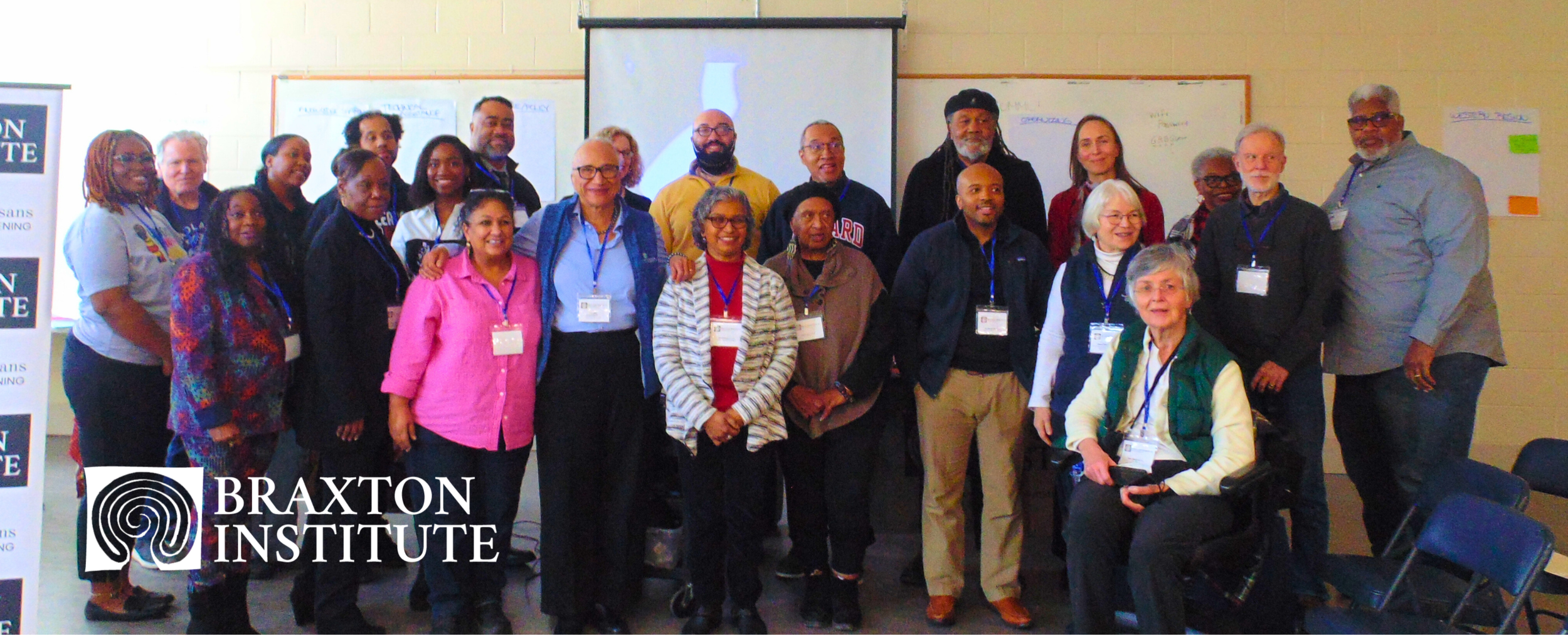
Photo by Jessica Ann Mitchell Aiwuyor