
By the Braxton Institute Team
Published Summer 2026
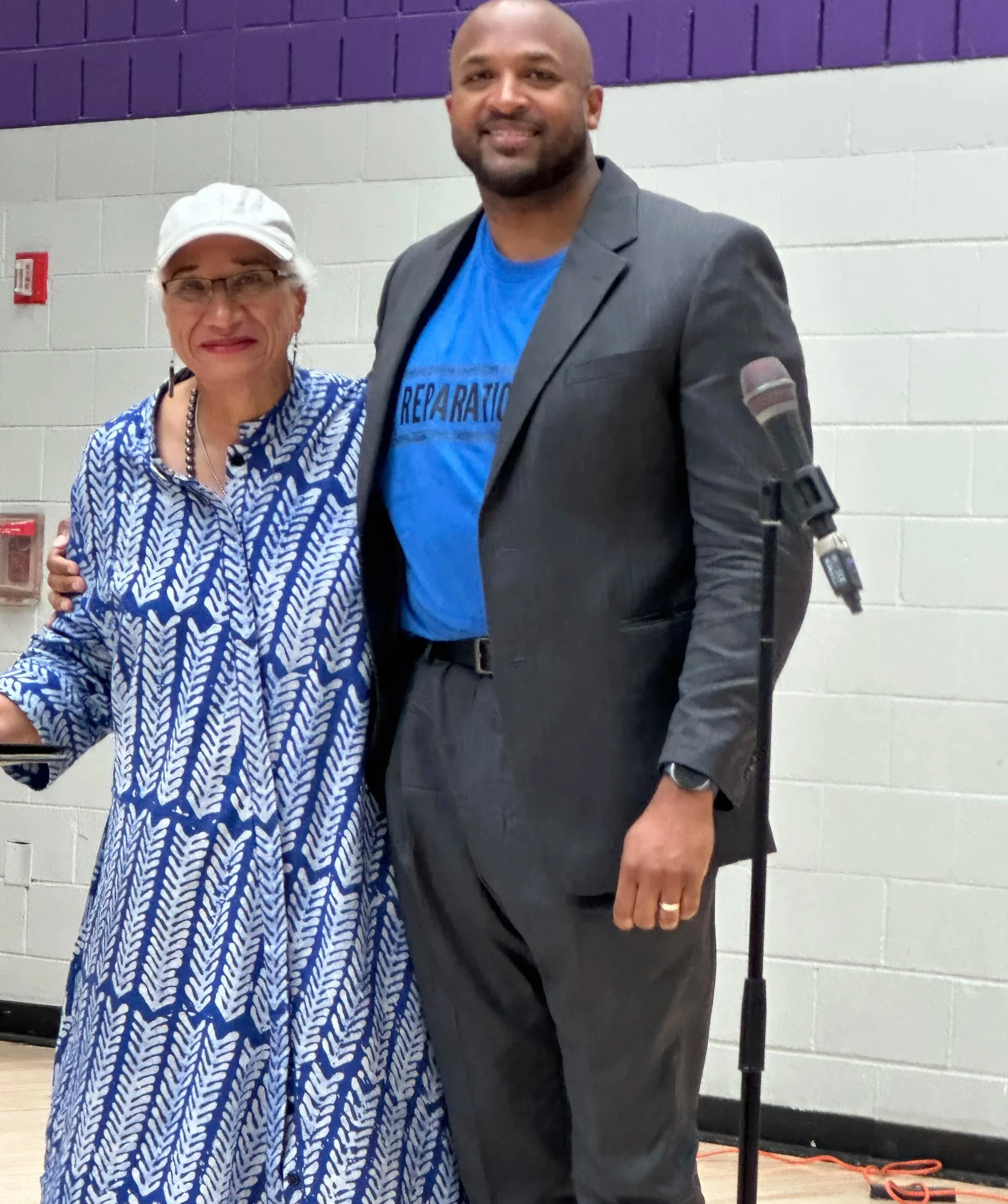
On June 28, 2026, the grounds of the Lakeland Community Center (5051 Pierce Ave, College Park, MD) transformed into a sacred space of truth-telling, local governance, and deep fellowship. From 1:00 p.m. to 3:00 p.m., community members, descendants, neighbors, and allies gathered for “Lifting the Lakeland Legacy: A Community Meal Celebrating Resilience and Repair.”
Co-hosted by the Braxton Institute alongside our partners—the Lakeland Community Heritage Project (LCHP), Lakeland Civic Association, First Baptist Church, and Embry A.M.E. Church—the afternoon honored historic milestones while advancing local, systemic reparations.
Why This Event Was Different—and Why It Matters
From the 1960s through the mid-1980s, urban renewal policies demolished family homes and forcibly displaced 104 out of 150 Lakeland households, stripping away decades of generational wealth. Because of this widespread geographic dispersal, our June gathering marked the first time in decades that so many displaced community members and descendants convened in one space.
Gathering directly at the Lakeland Community Center—a facility at the heart of the historic neighborhood—served as both an accountability mechanism and a truth-telling forum. For many who had lost hope in systemic justice, seeing tangible policy outcomes right in their home community directly restored a belief in the power of repair.
Rather than offering empty symbolism, the gathering directly embodied the four pillars of a true culture of repair:
Truth & Reckoning: Celebrating the African American Redress Network’s harm report and The Way Forward report presented to City Council.
Redress & Reclaiming Space: Reclaiming public identity through the official renaming of the Lake Artemisia Recreation Area at Lakeland, the Lakeland College Park Community Center and the Smithsonian-affiliated exhibition, Lakeland: Reclaiming Our Space at the College Park Aviation Museum.
Economic & Material Repair: Highlighting city land purchases for dedicated memorial space, housing pilot acquisitions via the College Park Community Preservation Trust, city scholarships, and critical state funding secured for LCHP.
Institutional Accountability: Launching the Lakeland Legacy Member Program—a formal designation created by the City’s Restorative Justice Commission (with applications accessible at the Lakeland Community Center) to ensure future restorative programs directly benefit affected descendants.
Community-Led Accountability and Recognition
Emceed by our CEO, Rev. Dr. Joanne Braxton, a Legacy Lakelander, the spirit-filled program opened with an invocation by Rev. Dr. Joanne Pumphrey of First Baptist Church and community singing of “Lakeland Will Shine,” led by Abigail Cohen.
We extended special recognition to the Restorative Justice Commission leadership—including Chair Maxine Gross, Mr. Robert Thurston, Ms. Ruth Murphy, Pamela Boardley, Violetta Sharps Jones, and Rev. Dr. Fannie Featherstone—reinforcing that this movement is firmly driven by grassroots guidance. In a solemn moment of sacred accountability, attendees held an ancestral ceremony, speaking aloud the names of those who were displaced or have passed.
Keynote speaker Rev. Dr. Robert Turner, author of Creating a Culture of Repair (2024), delivered a powerful message reinforcing that local, community-led initiatives are the essential engine for national repair.
Joy as an Act of Liberation and Repair
At 1:50 p.m., as the metallic melodies of Dr. Joanne Francis’s steel pan music filled the air around the center, long-separated neighbors gathered over a catered meal of fried fish, chicken, hush puppies, and mac and cheese.
By pairing concrete policy breakthroughs with shared bread, Lifting the Lakeland Legacy demonstrated that true repair requires both material redress and community joy. Joy is not an afterthought to justice—it is an act of liberation. This event serves as a living blueprint for local repair. We invite you to join with us in building spaces where truth is spoken, harm is redressed, and resilience is celebrated.
May it be so.