
Addressing the United Nations in Geneva during a meeting of the Reparatory Justice and Cultural Heritage: Museums and Restitution International Civil Society Working Group, Braxton Institute President Dr. Joanne Braxton delivered a powerful call to reframe global museum restitution.
Speaking on behalf of the International Civil Society Working Group, the Braxton Institute for Sustainability, Resiliency and Joy, and three partnering U.S. historic museum sites, Dr. Braxton urged international leaders to look beyond physical relics and confront the broader narrative impacts of chattel slavery.
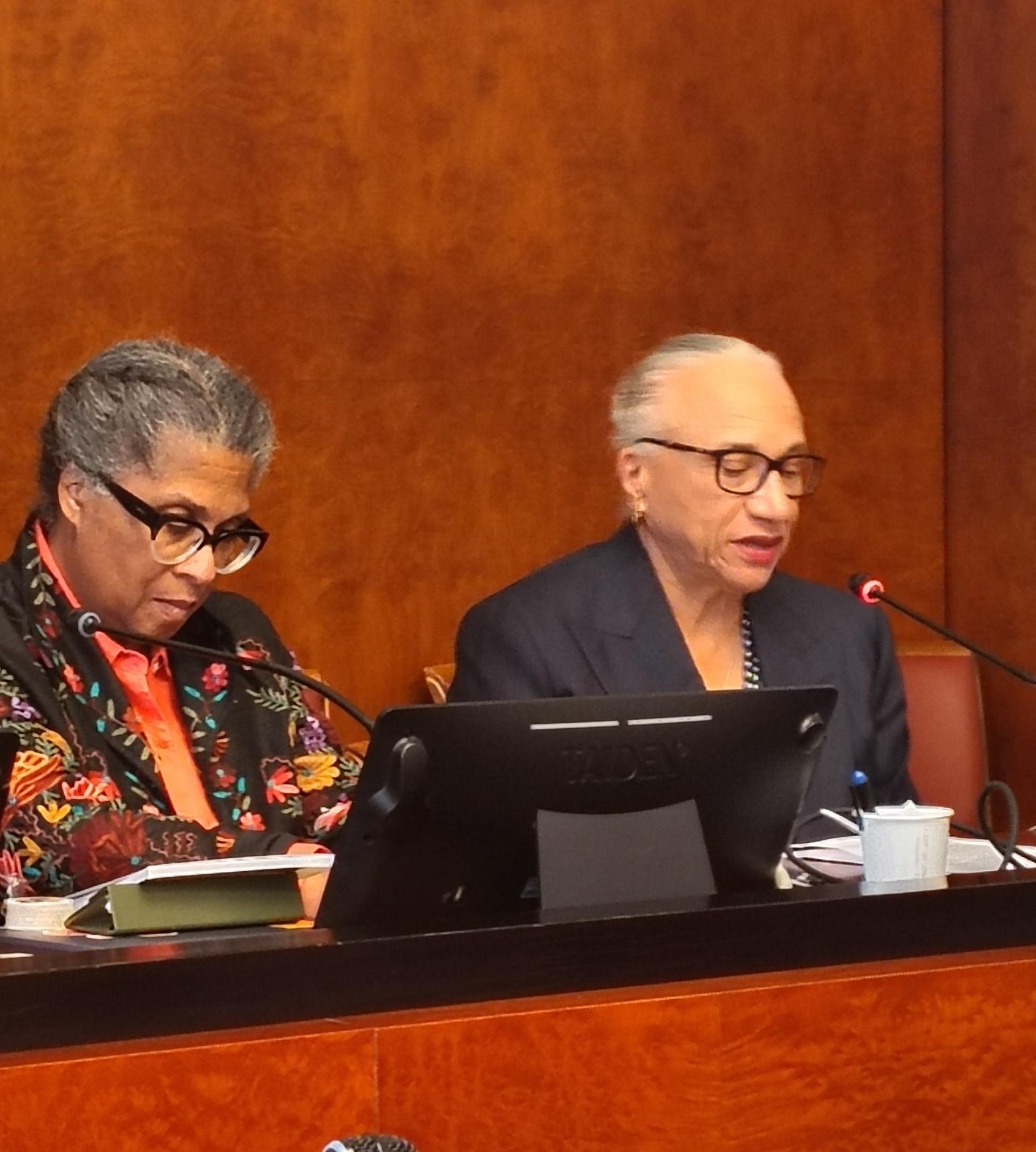
Maxine Gross and Joanne M. Braxton at the United Nations in Geneva, Switzerland.
Photo by Dr. Linda Mann, African American Redress Network
Grounding Global Restitution in Living History
In her address, Dr. Braxton connected high-level policy directly to personal and collective memory. She highlighted the industrial plantation where her second great-grandfather was enslaved—a site built by ironworkers kidnapped from Africa for their specialized technological knowledge. While the site long operated as a nostalgic museum celebrating colonial history, it has begun taking a crucial turn toward truth-telling.
For the Braxton Institute and its partner institutions, true restitution requires deepening this pivot. It means returning not just stolen objects, but the essential context, spiritual memory, and historical truth necessary to repair our shared story as African people.
“We are confronting the challenge to return to this site the artifacts of consciousness that tell the story of the African people who were transported there, and the resilient and creative legacy of their descendants.” — Dr. Joanne Braxton
Three Guiding Questions for Decolonizing Museums
To chart a path forward for diaspora institutions committed to narrative transformation, Dr. Braxton outlined three central inquiry pillars to guide future museum partnerships:
Narrative Empowerment: How does restitution come into play for people of African descent advocating narrative change for the decolonized diaspora museum?
Beyond Bronze: How do we liberate “artifacts of consciousness” with the same urgency as physical bronze and stolen relics?
Reciprocal Healing: How do we ground our work in reciprocity and care between Africans on the continent and the diaspora?
Fulfilling Our Transnational Responsibility
Restitution is more than an institutional administrative process; it is an act of spiritual and narrative justice. By pairing the physical return of heritage with the liberation of African and African-descent consciousness, we move closer to embodying our collective cultural legacy and honoring our responsibilities to one another across the globe.