
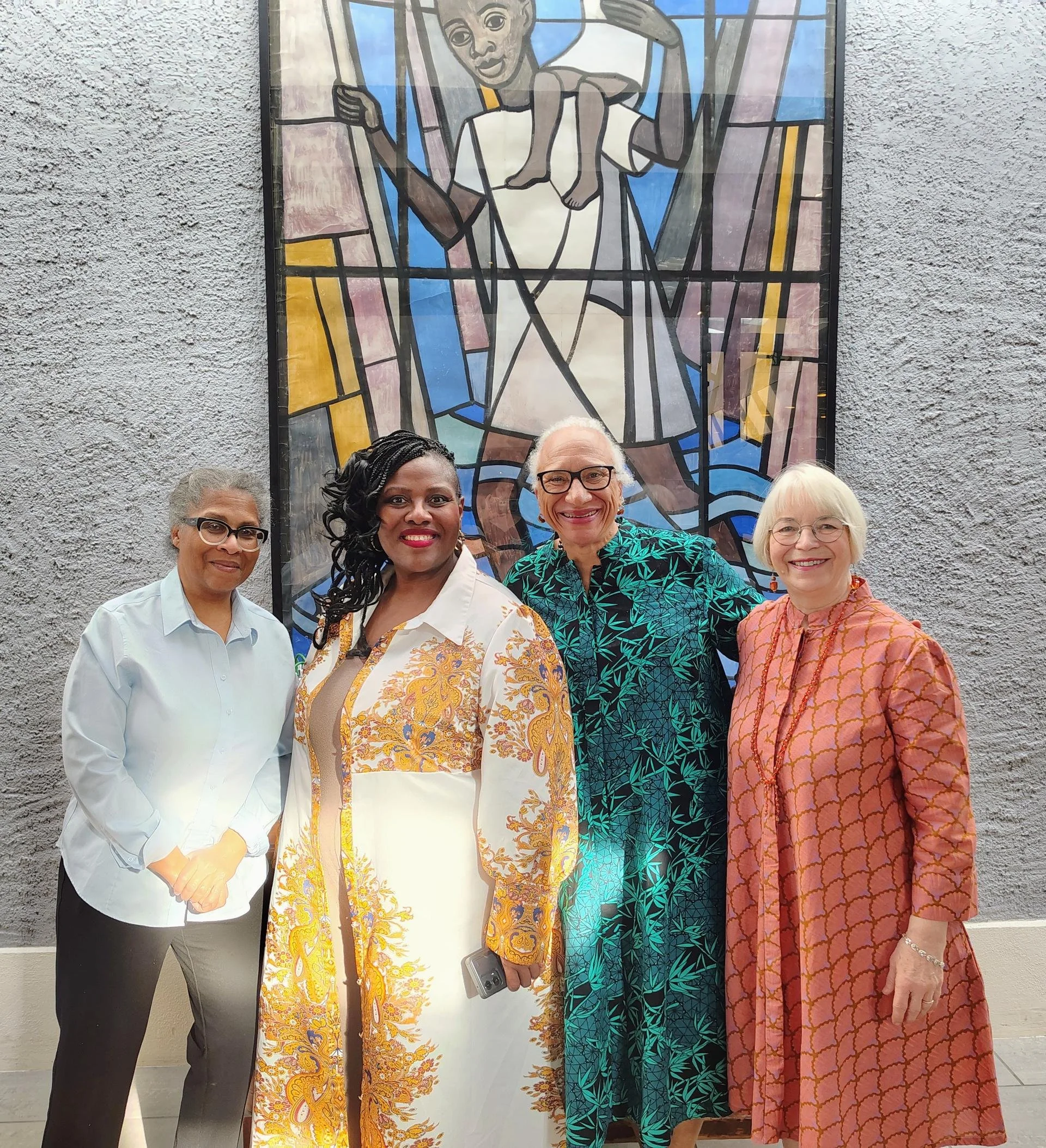
Members of the Braxton Institute team, Maxine Gross, Rev. Dr. Kelle Brown, Dr. Joanne Braxton, and Rev. Dr. Rebecca Ann Parker at the Ecumenical Institute at Château de Bossey.
In April 2026, a delegation from the Braxton Institute—Rev. Dr. Kelle Brown, Rev. Dr. Rebecca Parker, Rev. Dr. Joanne Braxton, and Ms. Maxine Gross—traveled to Geneva, Switzerland, to participate in the 5th Session of the United Nations Permanent Forum on People of African Descent. The convening brought together activists, scholars, and institutional leaders from across the globe, all working toward reparatory justice, cultural preservation, and systemic equity.
Voices from the Floor
A central milestone of the delegation’s time in Geneva was the opportunity to speak directly to the international body. Both Dr. Joanne Braxton and Ms. Maxine Gross were honored to address the assembly from the floor of the United Nations, bringing community-grounded perspectives on narrative restitution, historical truth-telling, and the liberation of “artifacts of consciousness” into global diplomatic dialogue.
A Transformative Collaboration: “Measuring Harm, Advancing Reparations”
While addressing the floor provided a powerful international platform, a primary highlight of the trip was the Braxton Institute’s participation in the official UN side event, Measuring Harm, Advancing Reparations: The Black Audit of Racial Justice and AARN’s Harm Reports. Held on Friday, April 17th, in Room III of the Palais des Nations, the session was co-sponsored by Howard University’s Thurgood Marshall Civil Rights Center (TMCRC) and the African American Redress Network (Columbia University and TMCRC).
Deepening the delegation’s engagement with global faith-based networks dedicated to moral repair and racial justice, delegation members including Rev. Dr. Rebecca Parker and Rev. Dr. Joanne Braxton also attended The Pan African Journey: Lessons of Transformation and Strategy and Voices of Durban: 25 Years Later: Why Identity Matters for Reparatory Justice, two impactful side events sponsored by the World Council of Churches.
During the AARN side event, both Dr. Joanne Braxton and Commissioner Maxine Gross presented on behalf of Reparations for Lakeland Now!—a campaign of the Braxton Institute in partnership with AARN and the Lakeland Community Heritage Project (LCHP)—grounding global conversations on data-driven research directly in the living history of Lakeland, Maryland.
Lakeland Takes the Global Stage
In her statement, Dr. Braxton detailed how Lakeland was transformed by Black families into a thriving community built around the “Five Pillars” of healthy urban living: housing, learning, gathering, nature, and connectivity. Tracing a lineage of resistance back to her great-grandfather, John C. Johnson—the first Black landowner in Lakeland in 1901—she illuminated how Jim Crow racial terror and land suppression evolved into the 1960s urban renewal policies that ultimately dispossessed and dispersed three-quarters of the community.
Dr. Braxton paid tribute to generations of Lakelanders who fought back, referencing historic August 1970 archival photos compiled by LCHP featuring elders Harry and Mary Braxton, Agnes Gross, and a young high school graduate turned leader, Commissioner Maxine Gross.
Validating the Healing Archive
The side event highlighted how methods of rigorous inquiry—combining legal analysis, movement lawyering, and community-based recordkeeping—document historical and ongoing racial harms. A focal point of the presentation by Dr. Braxton and Commissioner Gross was showing how ethnographic documentation acts much like museum practices of preservation and interpretation to strengthen accountability. They demonstrated how the partnership with AARN—engaging the research frameworks of Howard University and Columbia University to analyze LCHP’s decades- long “healing archive”—formally validated the community’s knowledge. This rigorous documentation established clear evidence of dispossession by municipal, university, and planning entities, creating new moral contexts for justice-making and restoring hope to a dispossessed community.
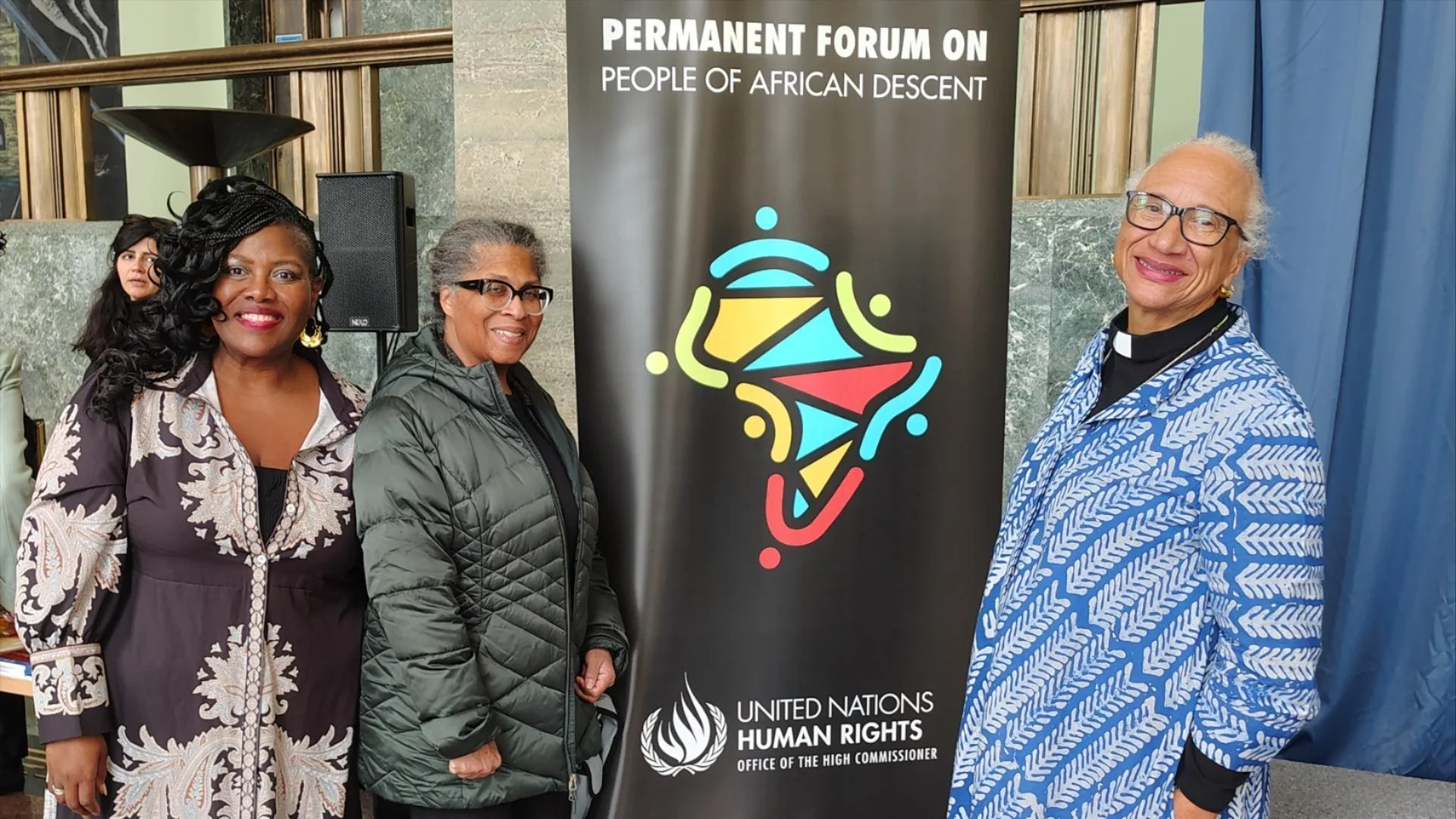
Rev. Dr. Kelle Brown, Maxine Gross, and Dr. Joanne Braxton at the UN. Photo by Rev. Dr. Rebecca Ann Parker.
Key Takeaways from the Delegation
Unified Leadership: The combined presence of Rev. Dr. Kelle Brown, Rev. Dr. Rebecca Parker, Rev. Dr. Joanne Braxton, and Ms. Maxine Gross reflected the institute’s interdisciplinary commitment to theology, history, education, and community advocacy.
Global African Synergy: Partnering with the African American Redress Network, Howard University’s Thurgood Marshall Civil Rights Center, and ecumenical partners like the World Council of Churches reinforced the importance of coalition-building across networks to amplify demands for narrative and structural repair.
Ongoing Commitment: The insights and global solidarity forged in Geneva continue to inform the Braxton Institute’s ongoing museum partnerships, community healing initiatives, and advocacy for cultural heritage.